 800+ 5 Star Reviews

How to Read Your Roof Inspection Report in St. Louis
Your roof inspection report in St. Louis is a record of what the roof looks like right now: the condition of the shingles, the flashing, the vents and the gutters, photos of anything damaged, and a severity rating on each finding. Read it in three passes. Start with the summary, then match every photo to the finding it belongs to, then look at what the inspector recommends and how soon. Once you see how the sections fit together, it’s easy to tell a small repair from an item that only needs watching, and to spot a roof that’s near the end of its life.
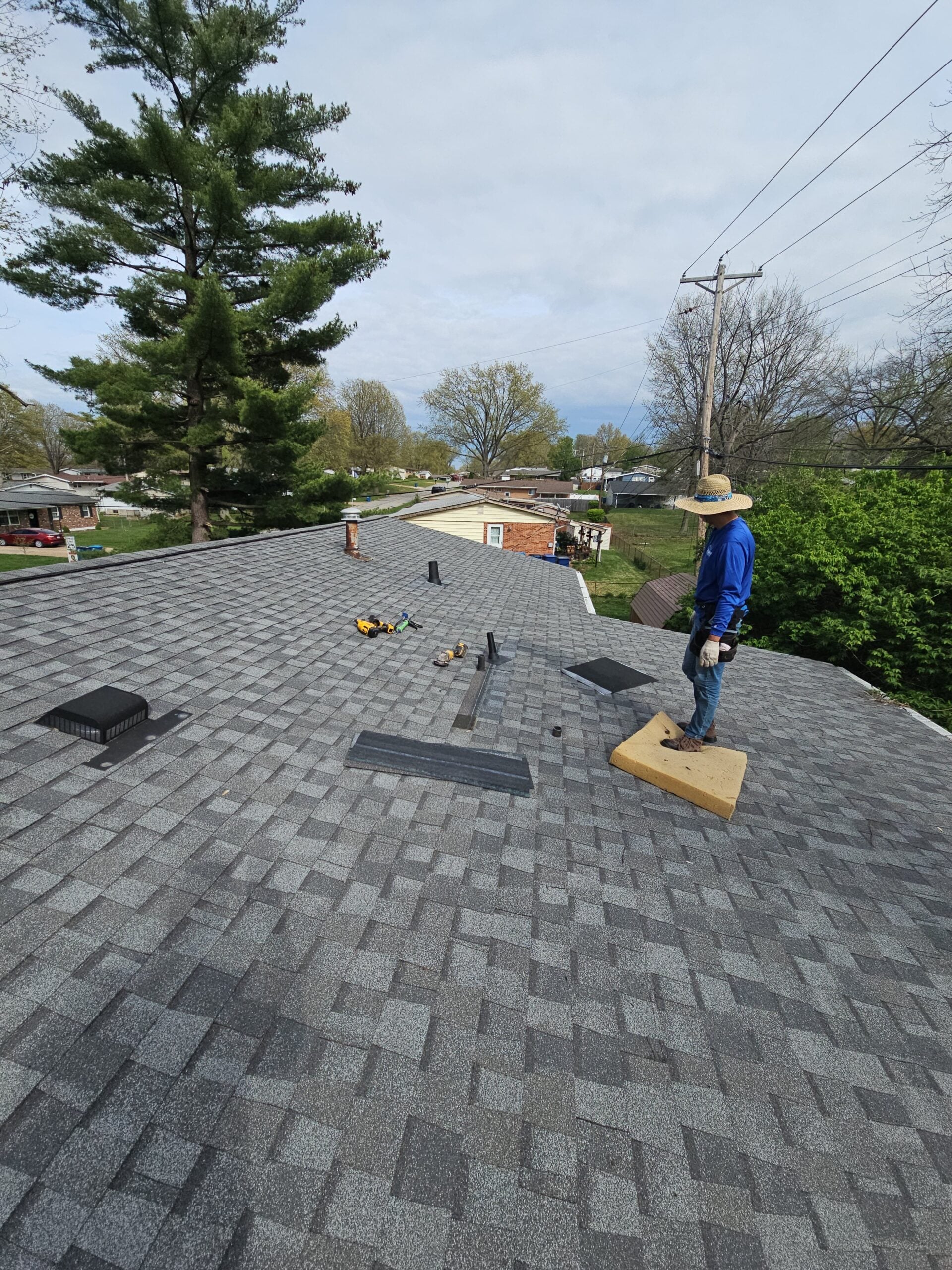
What Does a Roof Inspection Include in St. Louis?
A real inspection covers much more than the shingles. We walk the roof surface, check the flashing at the chimney, walls and skylights, look at the vents and the ridge, review the gutters and downspouts for granules and sagging, then go into the attic when there’s safe access to look for daylight, damp decking and weak ventilation. Everything we find gets photographed. Because this market sits in a heavy hail and storm corridor, we also look for the bruising and granule loss hail leaves behind, plus the lifted tabs that come after a winter of freeze-thaw swings. Our residential inspections are free and include a digital analysis, so you get the photos and the notes, not a verbal summary at the curb.
Your Roof Report Explained, Section by Section
Most reports follow the same order, and knowing what each part is for saves you reading the whole document twice.
- Summary: a short statement of overall condition with the inspector’s main recommendation. Read it first, then confirm it against the detail below instead of taking it on its own.
- Photo log: dated images tied to each issue. Every claim in the report should have a picture behind it, and anything you can’t match to a photo is worth a question.
- Findings list: each problem, where it sits on the roof, and how urgent it is. This is the part insurance adjusters and future buyers read most closely.
- Recommendations: the repair, the maintenance or the replacement being suggested, usually with a timeframe for acting on it.
- Scope and limits: what couldn’t be reached that day, such as a blocked attic hatch or a slope too steep to walk safely.
What the Severity Levels Mean
Ratings vary a little between companies, but they usually sort roof inspection findings into three buckets. Monitor means the component is still doing its job and needs another look next visit. Repair means something has failed in one spot and water can get in, so it belongs on the schedule soon. Replace means the trouble is widespread enough that patching it costs more over time than starting fresh. Ratings describe risk, not age, so a younger roof with cracked pipe boots can land on repair while an older roof in good shape sits on monitor. If a rating isn’t explained in writing, ask for the reasoning in writing too.
Findings We See Most on St. Louis Roofs
Local weather leaves a signature, and the same handful of notes show up again and again on homes around the region.
- Granule loss, which often shows up as grit collecting in the gutters before it’s visible from the ground.
- Creased or lifted shingles, loosened by the freeze and thaw cycles that run through a Missouri winter.
- Ceiling and eave staining from ice dams, common on the low-pitched ranch and split-level roofs around Fenton and South County.
- Hail bruising on the shingle mat, dents on vents and soft metal, the marks an adjuster looks for after a storm.
- Packed valleys after the leaves drop, holding moisture against the shingles near the eaves.
Repair or Replace: How the Findings Add Up
One failed pipe boot is a repair. Widespread granule loss, soft decking and leaks in several places usually point the other way. We weigh how much of the roof is affected, the age of the system, and if the damage is storm related, because that changes the insurance conversation. If the report leans toward a fix, our roof repair team handles it from the written estimate forward. If it leans the other way, our roof replacement page walks through materials and process, and residential financing is available at 9.99% so a bigger project can be planned instead of postponed.
Use the Report as a Roof Inspection Checklist in St. Louis
Keep the document. A roof inspection report in St. Louis gives you a dated baseline, so the next inspection shows what moved and what held. It also helps with paperwork: St. Louis City and St. Louis County run separate building departments with their own permit processes, so the first thing to confirm on any permitted work is which jurisdiction your address falls under. We cover the whole metro, and you can see the neighborhoods on our St. Louis service area page.

Get a Report You Can Actually Use
A roof report should leave you better informed, not more confused. Our inspectors document what they see, rate it honestly, and explain the findings in plain language before anyone talks about a quote. Licensed, insured and local, we’ve built our name on clear communication and clean job sites. Reach out to our team to schedule your free residential inspection with digital analysis.
Frequently Asked Questions
Do you charge for a roof inspection?
No. At Tesson Roofing & Exteriors, we provide free residential inspections with a digital analysis, so you receive photos and written findings at no cost and with no obligation to book work.
How often should a roof be inspected?
A good rule is a look after any major storm and again before winter sets in, so small problems get caught while they’re still small.
What does a roof repair cost?
At Tesson Roofing & Exteriors, we price repairs by the type of damage, such as a leak, missing shingles or a sealing issue. Contact our office for a custom repair quote.
Do you offer financing for a replacement?
Yes. At Tesson Roofing & Exteriors, we offer residential financing at 9.99%, and we’ll walk you through the payment options that fit the project before work is scheduled.