 800+ 5 Star Reviews

Fall Roof Maintenance in St. Louis: Your Roof and Gutter Prep Checklist
Fall roof maintenance in St. Louis comes down to five jobs: clearing the gutters, clearing leaf debris off the roof, checking shingles and flashing, checking attic ventilation, and handling small repairs before the first hard freeze. Work through those in October and November and you cut the odds of an ice dam, a stained ceiling, or a leak that shows up in the middle of January. We work on roofs across St. Louis City and St. Louis County, and the pattern repeats every year. Roofs that get attention in fall are the ones that come through winter intact.

Why Fall Matters So Much on a St. Louis Roof
Our winters swing hard. A warm afternoon melts snow on the roof, a cold night refreezes it at the eaves, and that freeze-thaw cycle lifts shingles and pushes water backward underneath them. Ice dams build along the eaves, then show up inside as a ceiling stain weeks later.
Leaves make it worse. Debris collects in the valleys and behind the chimney, holds moisture against the shingles, and speeds up decay near the eaves. Low-pitched roofs, common on the 1960s and 1980s ranch and split-level homes around Fenton, drain slowly and hold that debris the longest. Clearing it out now is the simplest way to protect the shingles underneath.
Your Autumn Roof Checklist for St. Louis Homes
Here’s the autumn roof checklist St. Louis homeowners can work through before the first freeze. Most items are quick, and together they cover the places winter damage usually starts.
1. Clear the Gutters and Downspouts
Fall gutter cleaning in St. Louis is the highest-value task on this list. Packed leaves hold water right at the eaves, which is exactly where ice dams form. Flush every downspout and confirm the water runs out the bottom and away from the foundation.
2. Sweep the Valleys and the Roof Surface
Valleys carry more water than any other part of the roof. Clear out leaves, twigs and needles so nothing traps moisture against the shingles through a wet winter.
3. Check the Shingles for Freeze-Thaw Damage
Look for lifted, curled, cracked or missing shingles, especially along the eaves and the ridge. A few loose shingles in November turn into an open leak during a February ice storm.
4. Watch for Granules in the Gutters
A light scattering of granules is normal. A gutter full of grit after one season usually means the shingles are near the end of their life, and that’s worth a professional look before winter.
5. Inspect Flashing, Boots and Sealant
Leaks start at the transitions. Check these spots:
- Metal flashing at chimneys, skylights and wall junctions
- Rubber boots around plumbing vents
- Sealant that has cracked, shrunk or pulled away
- Any rust, gaps or lifted edges
6. Check Attic Ventilation and Insulation
Ice dams usually begin as an attic problem. Warm air escaping into the attic melts the snow on the deck, the water runs down and refreezes at the cold eaves, and it backs up under the shingles. Confirm soffit vents are clear, insulation is even, and bath fans exhaust outside.
7. Trim Branches Over the Roof
Limbs scrape shingles in high wind, drop a steady load of debris into the gutters, and give squirrels a bridge onto the roof. Cut them back before winter storms arrive.
8. Fix the Small Things Now
A lifted shingle, a cracked boot or loose flashing is a short visit in October. The same problem in January means working around ice and a wet ceiling below. Our roof repair team in St. Louis handles these before the weather closes in.
How to Prepare Your Roof for Winter in St. Louis Without Climbing Up
Most of this checklist can be done from the ground with a careful look and a pair of binoculars. Wet leaves, steep pitches and brittle shingles make fall one of the riskiest times to be on a ladder, so leave the roof itself to a crew that does it daily.
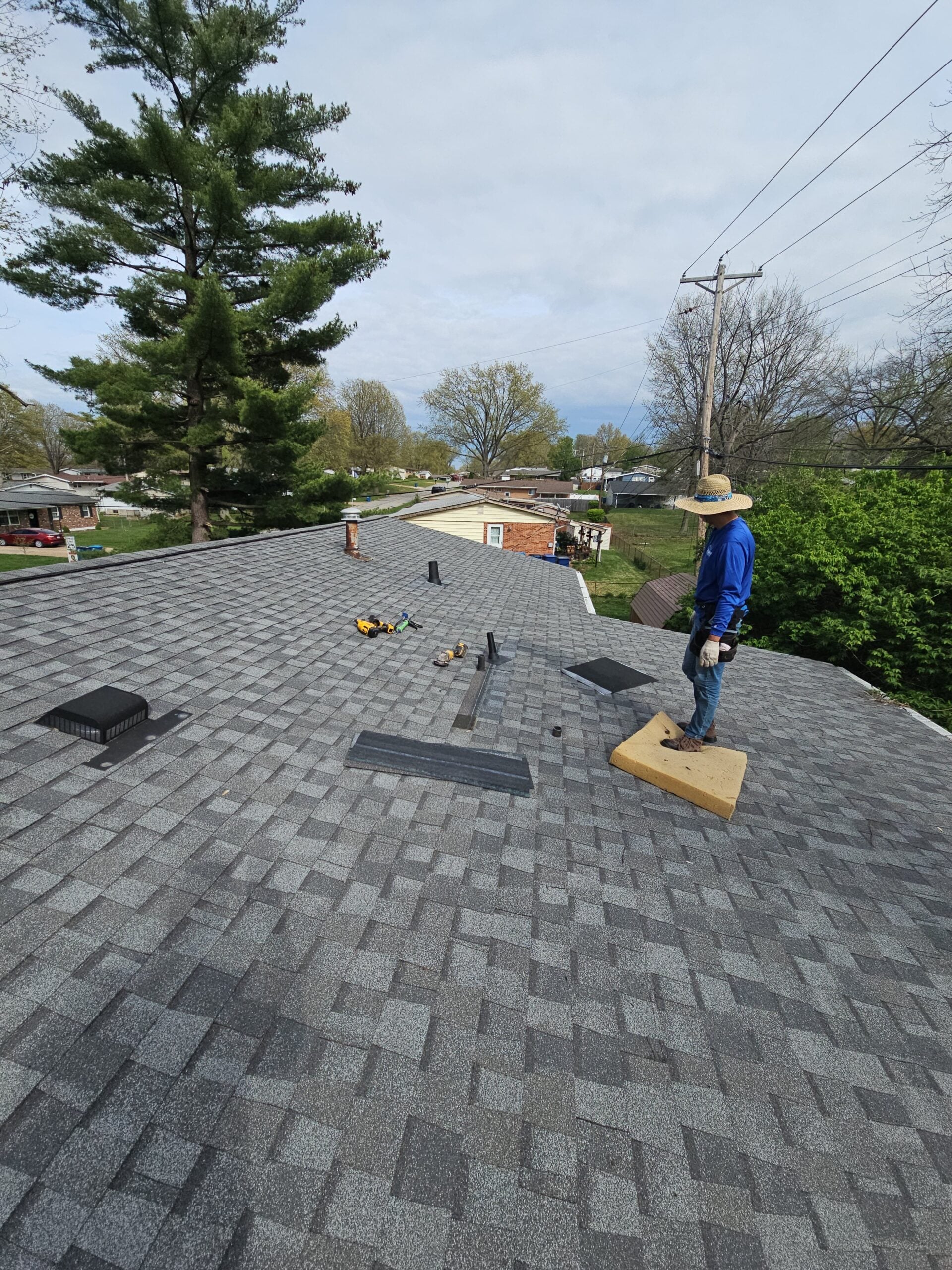
That’s where seasonal roof maintenance in St. Louis pays off. We offer free residential inspections with a digital analysis, so you see photos of what we found and a clear recommendation instead of a verbal guess. We’re licensed and insured, we clean up the site when we’re done, and our call center answers 24/7 when something goes wrong at a bad hour. Financing at 9.99% is available for residential projects, and larger work gets filed with the right building department, since St. Louis City and St. Louis County run separate permit processes. You can see the full range of our residential roofing work and the communities we cover across St. Louis.
Head Into Winter With a Roof You Can Count On
Every St. Louis winter tests the same weak points: tired shingles, clogged gutters, worn flashing and a poorly vented attic. Finding them in the fall keeps a small fix from turning into interior damage. Our team has worked on these roofs long enough to know what each neighborhood’s housing stock tends to need. Contact Tesson Roofing & Exteriors to schedule your free inspection before the first freeze.
Frequently Asked Questions
When should fall roof work be done in St. Louis?
The best window is October through late November, once most leaves are down and before the first hard freeze makes repairs harder and slower to schedule.
How much does a fall roof check cost?
Residential inspections are free at Tesson Roofing & Exteriors. Any repair we recommend is priced by the type of damage and the materials involved, so we quote each roof individually.
Do you offer free estimates?
Yes. Tesson Roofing & Exteriors provides free, no-obligation estimates with no pressure, so you have the photos, the findings and the numbers before you decide anything.
Is financing available for fall repairs?
Tesson Roofing & Exteriors offers residential financing at 9.99%, so a repair or replacement found during a fall inspection doesn’t have to be paid all at once.
What should be done before the crew arrives?
Clear vehicles from the driveway and move patio furniture away from the house. Tesson Roofing & Exteriors handles the rest, including site protection and cleanup when the work is finished.