 800+ 5 Star Reviews


7 St. Louis Architectural Landmarks and the Roofs That Keep Them Standing
St. Louis architectural landmarks tell the city’s story in stone, steel, brick and terra cotta, and most of them are still standing because someone kept water out of them. Below are seven of the most recognizable buildings in town, the style each one represents, and what their upkeep says about older roofs in this region. If your own home goes back a few generations, the same hail seasons and freeze-thaw swings that test these landmarks test your roof every year.
Why St. Louis Architecture Has Lasted This Long
St. Louis architecture covers a lot of ground. The city holds red brick two-flats and four-family buildings from the early 1900s, Kirkwood and Webster Groves hold craftsman bungalows and Tudor revivals, and South County is full of post-war ranch homes. What these historic St. Louis buildings share is a climate that never eases up: a high-frequency hail corridor, humid summers above 90 degrees, winter ice storms and hard freeze-thaw cycles. Roofs here work for their keep, and every landmark below has needed steady care to reach us intact.
1. The Gateway Arch
Eero Saarinen designed the Arch in 1947, and its stainless steel skin rises 630 feet over the Mississippi riverfront as the tallest man-made monument in the United States. Nothing about it looks like a house, yet it makes the point every roof makes: the outer surface and the joints between its panels are what keep weather away from the structure underneath.
2. The Old Courthouse
Completed in 1864, the Old Courthouse is Greek Revival work crowned by a dome inspired by St. Peter’s Basilica in Vatican City, and it hosted the Dred Scott case that pushed the national argument over slavery forward. Domes and curved surfaces only shed water while their seams and flashing stay sound, which is why civic buildings this old get looked at so often.
3. Union Station
Built in 1894, Union Station blends Romanesque Revival and Beaux-Arts design, and its Grand Hall carries a 65-foot vaulted ceiling covered in mosaics. The station now holds an aquarium, a Ferris wheel and restaurants. Buildings that get a second life like this one need the roof sorted out first, because every finish below it depends on a dry deck.
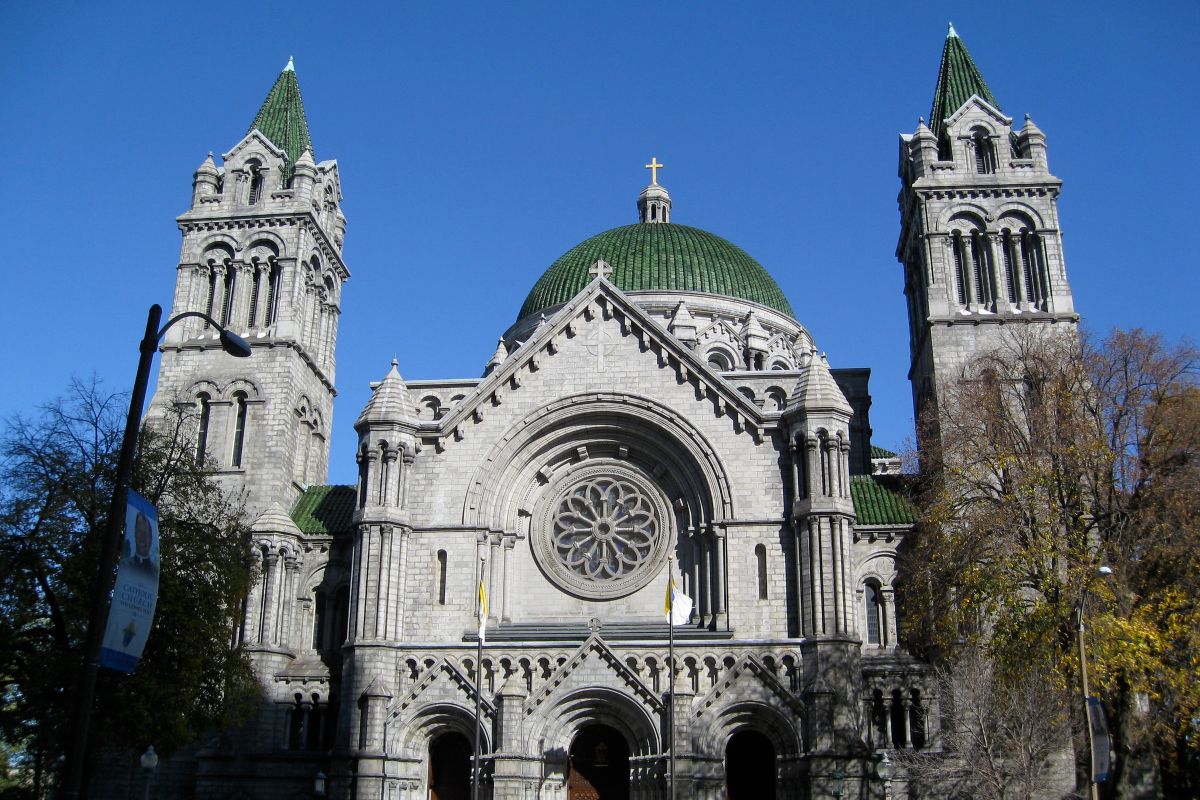
4. The Cathedral Basilica of Saint Louis
Finished in 1914 in the Central West End, the Cathedral Basilica mixes Romanesque and Byzantine design and holds one of the largest mosaic collections anywhere, with more than 41.5 million pieces of glass inside. When artwork like that sits under a roof, drainage details matter more than the view from the street. One slow leak can undo decades of work.
5. The Wainwright Building
Louis Sullivan and Dankmar Adler designed this 10-story building in 1891, and its steel frame and ornate terra-cotta detailing made it one of the first modern skyscrapers. Sullivan’s line, “form follows function,” still fits roofing: downtown buildings carry low-slope roofs that rely on membranes, seams and drains instead of pitch to move water off.
6. The Missouri Botanical Garden
Henry Shaw founded the garden in 1859, and two structures stand out on the grounds. The Climatron, a geodesic dome conservatory, shows what modern engineering can do with a curved shell, while the Victorian lines of Tower Grove House show the steep pitches and tight valleys of that era. Valleys like those are exactly where fall leaves collect and hold moisture.
7. The Anheuser-Busch Brewery
Established in 1852, the brewery complex is Romanesque Revival in red brick, with towering smokestacks and ornate detailing across its roofline. Big industrial buildings like these stay sound because water gets moved away from the walls quickly, which is the job gutters, soffit and fascia do on a house.
What Landmark Roofs Teach St. Louis Homeowners
The landmark roofs St. Louis is proud of all come down to the same habits any house needs. We see the same short list on older properties across the region:
- Flashing, valleys and seams checked before they leak, not after a ceiling stain shows up
- Gutters, soffit and fascia kept clear so meltwater leaves the structure
- Attic ventilation that limits ice dams along the eaves each winter
- Repairs documented and permitted in the right jurisdiction, since St. Louis City and St. Louis County run separate building departments
That last one trips people up at closing time. Our team handles roofing across St. Louis, including residential roofing, roof repair, roof replacement, roof maintenance, siding, gutters, and soffit and fascia, and we start with a free residential inspection and digital analysis so you can see what we see before anything gets decided.

Keep Your Own Piece of St. Louis Standing
St. Louis historic homes don’t need a museum budget to stay sound, they need someone who knows how water behaves on an older roof in this climate. We’re licensed and insured, we work clean, and we explain what we find in plain language. If your roof is showing granules in the gutters, lifted shingles or a stain spreading on a ceiling, contact our team and we’ll schedule your free inspection.
Frequently Asked Questions
Which landmark here is the oldest?
Of the seven on this list, the Anheuser-Busch Brewery goes back furthest, established in 1852, with the Missouri Botanical Garden founded seven years later in 1859.
Do older St. Louis homes need different roofing work?
Often, yes. Older rooflines carry steeper pitches, more valleys and detailed trim, so Tesson Roofing & Exteriors inspects the flashing and transitions closely before recommending a repair or a replacement.
Does Tesson Roofing offer free inspections?
Yes. Tesson Roofing & Exteriors provides free residential inspections with a digital analysis, so you get photos and findings without any cost or pressure before you decide anything.
How much does a roof replacement cost here?
Pricing at Tesson Roofing & Exteriors depends on the square footage of your home, the materials you choose and how complex the work is, so we quote every property individually.
Is financing available?
Yes. Tesson Roofing & Exteriors offers residential financing at 9.99%, and our team can walk you through the options when we review your estimate.